Few clinical signs carry as much weight in as little time as the pupillary light reflex (PLR). In a few seconds at the bedside, the pupils tell us whether the afferent visual pathway is intact, whether the third cranial nerve is under compression, whether the midbrain is functioning, and whether intracranial pressure is rising. Across TBI, stroke, cardiac arrest, SAH, and altered sensorium, pupil reactivity is embedded in virtually every validated prognostic model in use today. And yet the way we examine the pupil — a penlight and a subjective impression — has barely changed in a hundred years. This primer is for the clinician who wants to think afresh about what the pupil measures, where that measurement fails, and what better measurement can do.
The neurobiology of the PLR
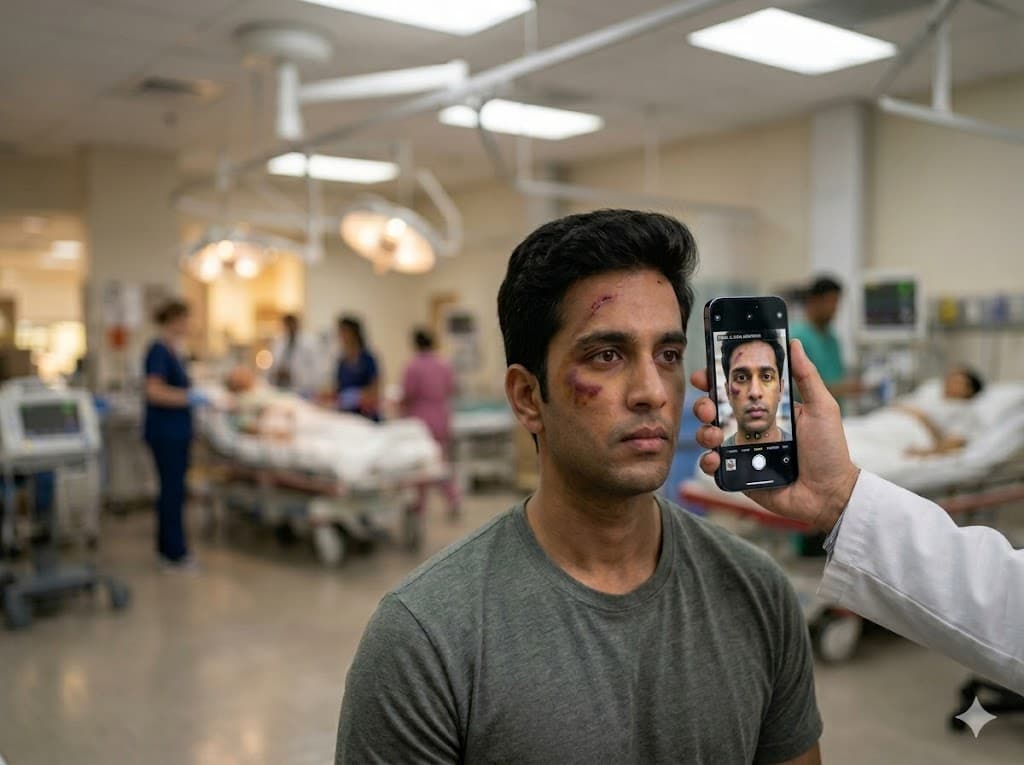
The PLR is a polysynaptic reflex with two limbs that together trace a large arc through the brainstem.
Afferent limb (CN II). Light on the retina activates rods, cones, and melanopsin-expressing intrinsically photosensitive retinal ganglion cells (ipRGCs). Signals travel along the optic nerve to the pretectal olivary nucleus in the dorsal midbrain, which then projects bilaterally to both Edinger-Westphal nuclei — hence the consensual response.
Efferent limb (CN III). Each Edinger-Westphal nucleus sends preganglionic parasympathetic fibres along the oculomotor nerve to the ciliary ganglion; postganglionic short ciliary nerves innervate the iris sphincter, producing miosis. A separate sympathetic pathway (hypothalamus → ciliospinal centre of Budge → superior cervical ganglion → long ciliary nerves → iris dilator) drives redilation.
The clinical power of this arc is anatomic. It runs through the dorsal midbrain and along the tentorial edge where CN III is vulnerable to compression. A new anisocoria, a sluggish response, or a unilateral fixed dilated pupil points straight to this anatomy — uncal herniation, PCom aneurysm, or ipsilateral mass effect — often before other localizing signs appear.
Why accurate pupil data matters
The penlight exam is subjective, and the literature on its reliability is unflattering. According to PubMed, Couret et al. — in a prospective, double-blinded neuro-ICU study (n = 406 paired measurements) — reported 18% global discordance between manual and automated PLR assessment, a 39% error rate for pupils under 2 mm, and nursing staff failing to detect 50% of anisocoria cases that the pupillometer identified DOI (PMID 27072310). Olson et al. (n = 2,329 assessments) found interrater reliability of κ = 0.54 for size and κ = 0.40 for reactivity, with only 33% of pupils called non-reactive by practitioners actually confirmed non-reactive DOI (PMID 26381281). Kerr et al. showed nurses systematically underestimate pupil size, with error growing as size grows DOI (PMID 27134226). A 2019 systematic review concluded that automated pupillometry is more precise, more reliable, and detects pupillary change before clinical deterioration is apparent DOI (PMID 30484008).
If an exam finding is going to decide whether a patient gets escalated, imaged, or operated on, the measurement behind it has to be better than the one we currently use.
ICU: accurate documentation and early anisocoria detection
In the neuro-ICU and mixed ICUs admitting brain-injured patients, the pupil exam is performed hourly or more. The handoff value of that record is only as good as the record itself: when one nurse writes “sluggish” and the next writes “brisk,” the trend that should trigger escalation disappears into language rather than numbers. Campos et al. (2025) put it plainly in a review of acute brain injury monitoring — manual headlamp assessment is “inaccurate,” while quantitative pupillometry yields objective measurements that “anticipate severe neurological deterioration and allow early intervention in life-threatening situations” DOI (PMID 40544555).
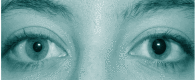
The anisocoria story matters most. A new, persistent asymmetry of ≥ 0.5–1 mm is often the first localizing sign of uncal herniation, evolving mass effect, or CN III compromise — and it is precisely the signal most prone to being missed on a subjective exam. Martins et al., in 748 severe-TBI patients, reported an adjusted OR of 11.52 for death with bilateral mydriasis and 2.65 with anisocoria versus isocoric pupils DOI (PMID 19590314). Tien et al. found that 100% of GCS-3 trauma patients with bilateral fixed dilated pupils died, versus 42% mortality in those whose pupils remained reactive DOI (PMID 16508482). Brennan, Murray and Teasdale formalised this in the GCS-Pupils score: mortality rises from 51% at GCS 3 to 74% at GCS-P 1 DOI (PMID 29631516). The 2024 NINDS TBI Classification Initiative now recommends that “pupillary reactivity should be documented in all patients” with TBI, recorded separately from the GCS DOI (PMID 40393504).
The story extends beyond trauma. In 456 comatose post-cardiac-arrest patients, Oddo et al. found that NPi ≤ 2 between 24 and 72 hours predicted unfavourable outcome with 0% false positives — substantially better than the manual PLR exam DOI (PMID 30478620). In 1,638 WFNS grade V SAH patients, Kobata et al. reported 3-month favourable outcomes of 4.5% with bilateral unreactive pupils versus 21.4% with reactive pupils, and pupillary findings measurably influenced surgical decision-making DOI (PMID 36825904).
An objective, time-stamped, shareable bilateral pupil record that any nurse or resident can produce identically across shifts turns a subjective ritual into a signal. Earlier escalation. Earlier imaging. Earlier intervention.
ER: overcrowded departments and altered sensorium
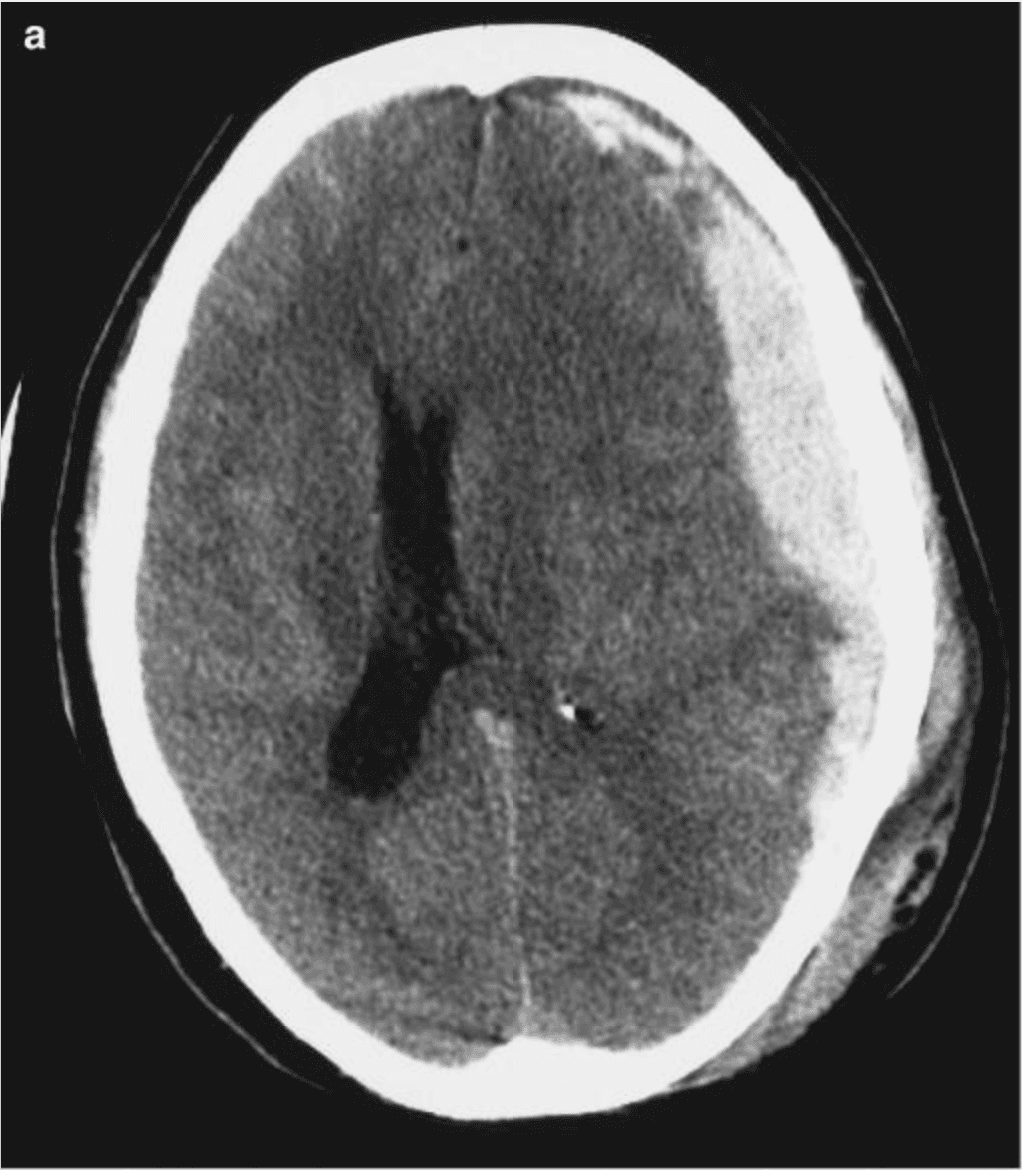
The ER is where the penlight exam meets its hardest test. Altered sensorium is one of the most common neurological presentations in Indian ERs — roughly 3–5% of all visits — arriving in crowded, understaffed resus bays with long CT waits. The differential is enormous (metabolic, toxic, infectious, structural), and the pupil exam is one of the few bedside findings that narrows it fast: pinpoint pupils with respiratory depression point at opioids; bilateral fixed dilated pupils in trauma raise catastrophic intracranial injury; a new anisocoria with a depressed GCS is structural until proven otherwise.
A recurring concern is that many of these patients are co-intoxicated — does the pupil exam still mean anything? According to PubMed, Jolkovsky et al. answered this in 325 intoxicated ED patients: the Neurological Pupil Index did not differ significantly between intoxicated patients and controls, even in the opioid-positive subset. Raw metrics (size, constriction velocity) were depressed by intoxication, but NPi — the composite reactivity index — was preserved, supporting its use “without risk of confounding by key intoxicants of abuse” DOI (PMID 36311337).
The data now extend to ED disposition. Gonzalez et al. (2025), in 50 comatose ED patients at a Level-1 trauma centre, found NPi 3.1–5.0 associated with 82% ED discharge, while NPi 0 was associated with 92% admission — the first published evidence that quantitative pupillometry adds information beyond standard ED clinical assessment DOI (PMID 40794983). Godau et al. showed that a minNPi < 4 identified non-convulsive status epilepticus among emergency patients with an AUC of 0.93 DOI (PMID 33215395). Marshall et al. demonstrated superior interrater agreement for automated versus manual assessment in acute stroke DOI (PMID 30489422). And in 808 “mild” TBI patients, Bossers et al. reported that absence of equal and reactive pupils was an independent risk factor (OR 2.1) for being more severely injured than the triage GCS suggested — 12.9% were reclassified upward DOI (PMID 29032474).
For an overstretched ER, a 7-second bilateral pupil measurement that any triage nurse can perform identically — and that generates a time-stamped record — frees physician time, sharpens the differential, and produces a defensible medicolegal trace across reassessments.
A brief history and how the PLR is measured today
Pupillometry has a longer history than most clinicians realise. Lowenstein and Loewenfeld's photoelectric pupillograph in the 1950s laid the groundwork; infrared video-pupillometers emerged in the 1980s–90s; NeurOptics introduced the NPi-100 and NPi-200 in the 2000s, bringing a standardised 0–5 Neurological Pupil Index into the neuro-ICU. The NPi-300 is widely considered standard of care in high-acuity neurocritical units today. Smartphone approaches have begun to close the accessibility gap: the University of Washington's PupilScreen programme has reported a smartphone pupillometer reaching 87% accuracy for severe TBI classification — outperforming the NPi-200's proprietary NPi score on the same dataset DOI (PMID 37464770) — and detecting PLR alterations in acute large vessel occlusion stroke DOI (PMID 37857150).
The measurement landscape today has three tiers: the penlight, with the reliability limits above; handheld infrared pupillometers at $5,000–7,000, typically single-eye and institution-bound; and smartphone-based research prototypes. The clinical question is no longer whether quantitative measurement is better — that is settled — but how to get it into every clinician's hands.
Where PupiLUX fits in
PupiLUX is a smartphone-based bilateral pupillometer. Using the rear camera and torch of an iPhone, it performs a 7-second bilateral PLR measurement and produces a two-page PupiLUX Pro Report with six quantitative parameters per eye — baseline diameter, constriction percentage, latency, maximum constriction velocity, average dilation velocity, and T75 — alongside reference ranges drawn from the peer-reviewed literature. Bilateral capture is the key architectural choice: anisocoria and inter-eye asymmetry carry much of the clinical signal, and are exactly what single-eye devices cannot measure.
PupiLUX is a measurement and screening tool — not a diagnostic device. The report surfaces quantitative data and reference ranges; the clinician interprets. We intentionally do not offer clinical impressions, decision rules, or diagnostic recommendations — regulatorily deliberate, and, we think, clinically correct.
Disclaimer. PupiLUX is a measurement tool, not a diagnostic device. For informational and screening purposes only.
Closing
The bedside pupil exam deserves the same modernisation every other vital sign has already received. If you are a neurologist, intensivist, emergency physician, or neurosurgeon and would like to evaluate PupiLUX in your practice, we would welcome the conversation.
PupiLUX is developed by R.Tej Health Analytics. Contact: info@pupilux.ai. Web: pupilux.ai. Clinical evidence citations in this article were verified against PubMed on 2026-04-15.
References
All references verified against PubMed on 2026-04-15. DOI links included per PubMed attribution requirements.
- [1]Couret D, et al. Reliability of standard pupillometry practice in neurocritical care: an observational, double-blinded study. Crit Care. 2016;20:99. DOI · PMID 27072310
- [2]Olson DM, et al. Interrater Reliability of Pupillary Assessments. Neurocrit Care. 2016;24(2):251-257. DOI · PMID 26381281
- [3]Kerr RG, et al. Underestimation of Pupil Size by Critical Care and Neurosurgical Nurses. Am J Crit Care. 2016;25(3):213-219. DOI · PMID 27134226
- [4]Phillips SS, et al. A Systematic Review Assessing the Current State of Automated Pupillometry in the NeuroICU. Neurocrit Care. 2019;31(1):142-161. DOI · PMID 30484008
- [5]Campos E, Tejerina Álvarez EE, Lorente Balanza JÁ. Clinical utility of quantitative pupillometric monitoring in patients with acute brain injury. Med Clin (Barc). 2025;165(4):107046. DOI · PMID 40544555
- [6]Brennan PM, Murray GD, Teasdale GM. Simplifying the use of prognostic information in traumatic brain injury. Part 1: The GCS-Pupils score. J Neurosurg. 2018;128(6):1612-1620. DOI · PMID 29631516
- [7]Menon DK, et al. Clinical Assessment on Days 1-14 for the Characterization of Traumatic Brain Injury: Recommendations from the 2024 NINDS TBI Classification Initiative. J Neurotrauma. 2025;42(13-14):1038-1055. DOI · PMID 40393504
- [8]Martins ET, et al. Mortality in severe traumatic brain injury: a multivariated analysis of 748 Brazilian patients. J Trauma. 2009;67(1):85-90. DOI · PMID 19590314
- [9]Tien HC, et al. Do trauma patients with a GCS of 3 and bilateral fixed and dilated pupils have any chance of survival? J Trauma. 2006;60(2):274-278. DOI · PMID 16508482
- [10]Bossers SM, et al. Discrepancy between the initial assessment of injury severity and post hoc determination of injury severity in patients with apparently mild TBI. Eur J Trauma Emerg Surg. 2017;44(6):889-896. DOI · PMID 29032474
- [11]Oddo M, et al. Quantitative versus standard pupillary light reflex for early prognostication in comatose cardiac arrest patients. Intensive Care Med. 2018;44(12):2102-2111. DOI · PMID 30478620
- [12]Kobata H, et al. Significance of Pupillary Findings in Decision Making and Outcomes of World Federation of Neurological Societies Grade V Subarachnoid Hemorrhage. Neurosurgery. 2023;93(2):309-319. DOI · PMID 36825904
- [13]Marshall M, Deo R, Childs C, Ali A. Feasibility and Variability of Automated Pupillometry Among Stroke Patients and Healthy Participants. J Neurosci Nurs. 2019;51(2):84-88. DOI · PMID 30489422
- [14]Jolkovsky EL, et al. Impact of acute intoxication on quantitative pupillometry assessment in the emergency department. J Am Coll Emerg Physicians Open. 2022;3(5):e12825. DOI · PMID 36311337
- [15]Gonzalez H, Chen Y, Addo N, Madhok DY. Pupillometry in the Emergency Department: A Tool for Predicting Patient Disposition. West J Emerg Med. 2025;26(4):1078-1085. DOI · PMID 40794983
- [16]Godau J, Bierwirth C, Rösche J, Bösel J. Quantitative Infrared Pupillometry in Nonconvulsive Status Epilepticus. Neurocrit Care. 2021;35(1):113-120. DOI · PMID 33215395
- [17]Maxin AJ, et al. Validation of a Smartphone Pupillometry Application in Diagnosing Severe Traumatic Brain Injury. J Neurotrauma. 2023;40(19-20):2118-2125. DOI · PMID 37464770
- [18]Maxin AJ, et al. A smartphone pupillometry tool for detection of acute large vessel occlusion. J Stroke Cerebrovasc Dis. 2023;32(12):107430. DOI · PMID 37857150