Quantitative
Bilateral Pupillometry
From Your iPhone
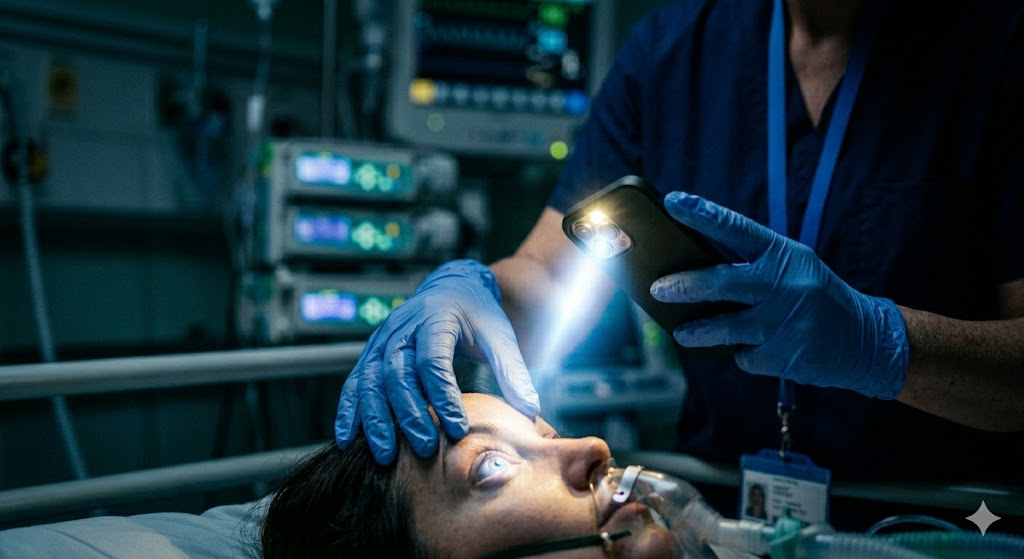
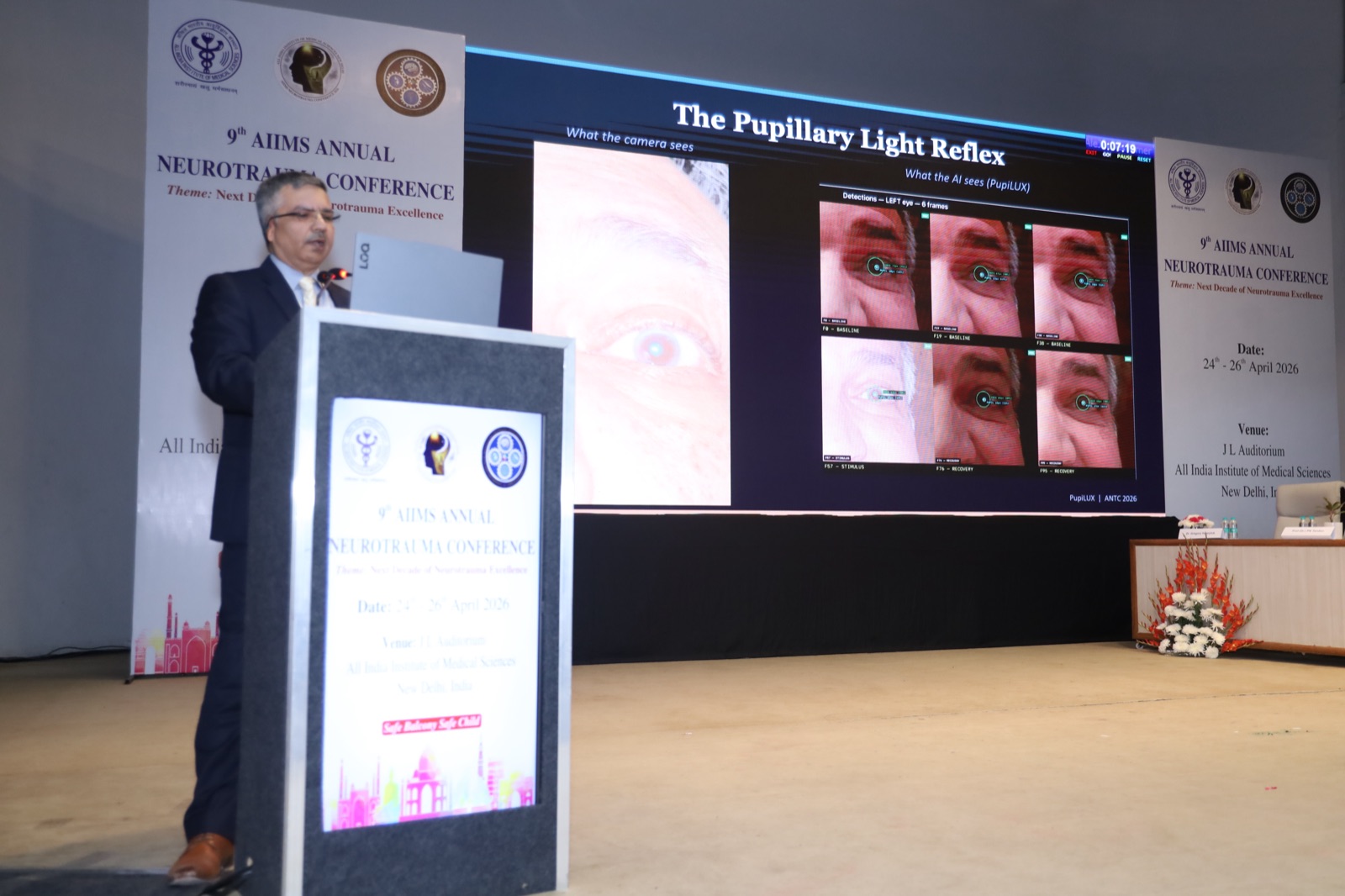
PupiLUX Pro performs a bilateral pupillary light reflex test in seven seconds. Voice-guided, on-device AI analysis produces a 2-page PupiLUX Pro Report — ready to print, share, or file. No dedicated hardware. No consumables.
Now available on the App Store|95 min median door-to-CT in Indian ERs|50% of anisocoria missed by penlight|85% of ER results go undocumented
"B/L NSNR" was fine for the 20th century
The penlight exam is subjective, hard to document, and impossible to trend. Your patients deserve quantitative data.
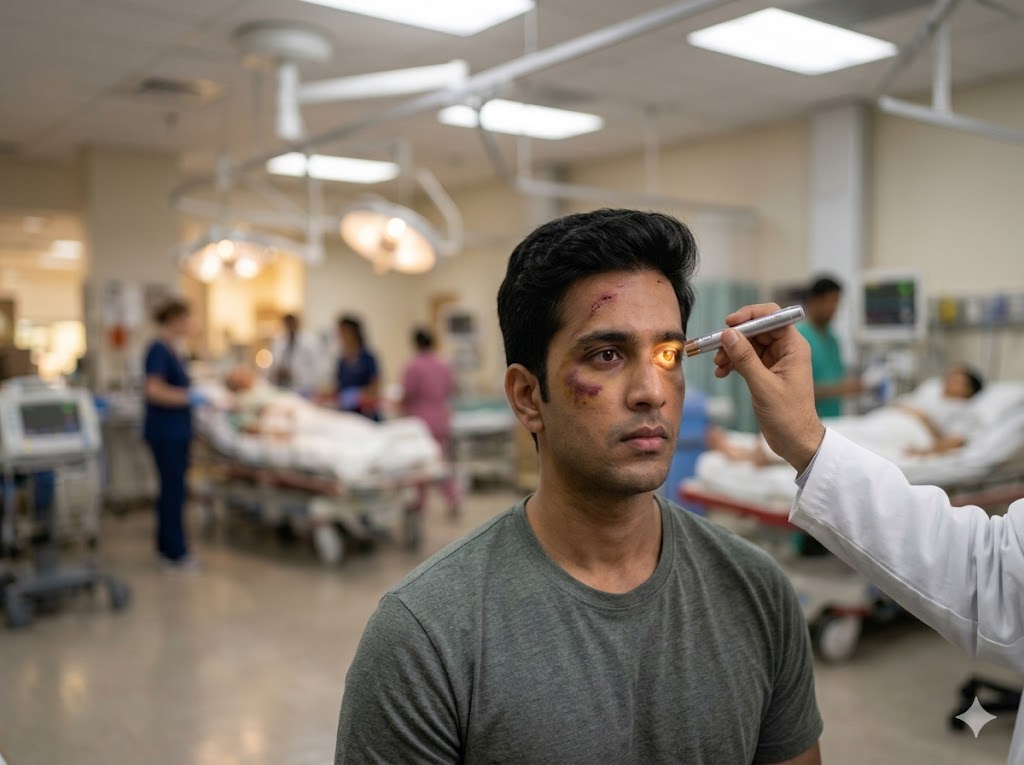
Penlight Exam
Subjective, undocumented, no data captured
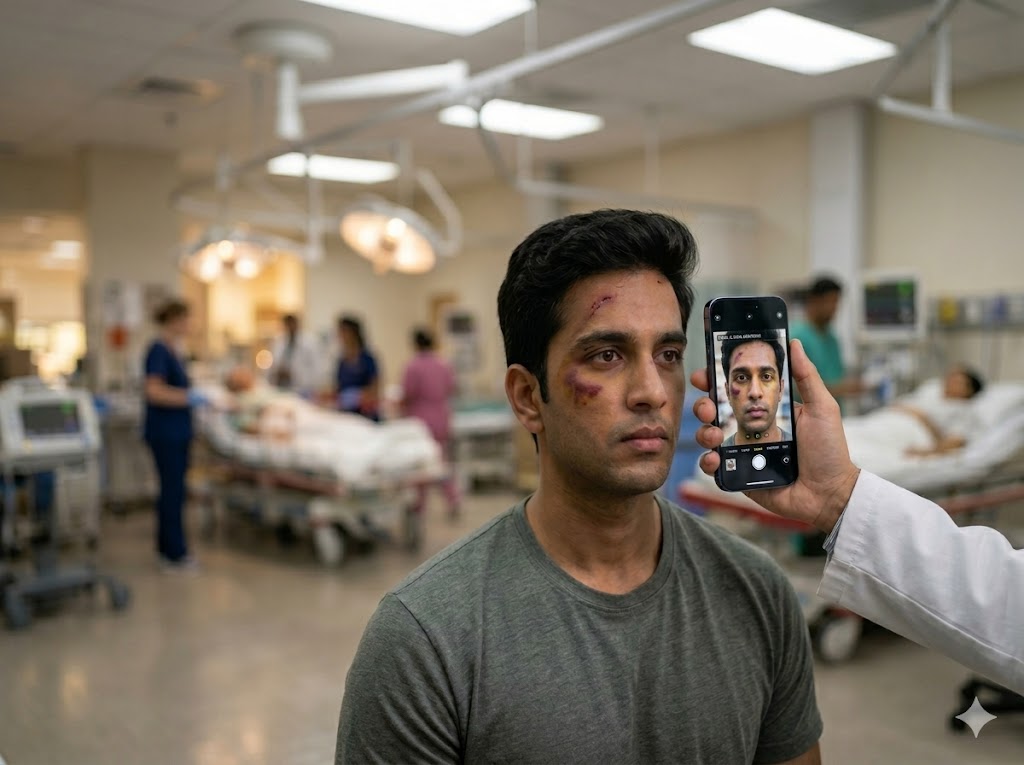
PupiLUX on iPhone
Quantitative, documented, shareable PDF
“NSNR tells you the pupil moved. PupiLUX tells you how much, how fast, and how it compares.”
World's First Bilateral Pupillometer — In Your iPhone
Six quantitative parameters per eye. Bilateral simultaneous capture. Voice-guided so any staff member can operate it. On-device AI — no cloud, no patient data leaves the phone.
Bilateral Simultaneous PLR
Both eyes captured in a single recording — no sequential measurement. Automatic face detection, iris lock, and inter-eye comparison with RAPD calculation.
AI Detection Pipeline
Dual-pipeline iris tracking: Apple Vision framework for primary detection with on-device neural network fallback. Self-reinforcing crop tracking for consistent results.
Voice-Guided — Zero Training
Audio prompts guide every phase: positioning, baseline, flash, recovery. A nurse in her first week or an intern on rotation produces a valid test. The protocol is encoded in the software.
On-Device Processing
All pupil detection and signal analysis runs locally on the iPhone Neural Engine. Zero cloud dependency. No patient images leave the device.
PupiLUX Pro Report
Every test auto-generates a timestamped PDF: bilateral pupillograms, 6 parameters per eye, colour-coded status, and quality grade. The documentation is built into the measurement.
RAPD Quantification
Relative Afferent Pupillary Defect (RAPD) classification with log-ratio quantification, and 6 standard PLR parameters per eye with audited reference ranges.
From launch to report in under 100 seconds
7 seconds for the PLR capture. Under 100 seconds for the full workflow — positioning, capture, AI analysis, and PDF report. Voice-guided throughout — no pupillometry training required.
Open & Point
Launch PupiLUX Pro. Hold iPhone ~12 inches from patient. Voice prompts guide positioning.
Auto-Detect Both Eyes
AI detects face and locks onto both irises simultaneously. No manual alignment needed.
Voice-Guided Flash
Automated 10-second protocol: 2s baseline, 1s torch flash, 7s recovery. Audio prompts throughout — hands-free.
PupiLUX Pro Report
Instant on-device analysis. Timestamped 2-page PupiLUX Pro Report with bilateral pupillograms, 6 parameters per eye, and colour-coded status.
Curious what a PupiLUX Pro Report looks like?
Download Sample Report (PDF, 494 KB)Different problems. Same seven-second test.
In the ICU, nobody is doing the exam between rounds. In the ER, even when exams happen, the data vanishes — and there are 95 minutes before CT where clinicians are flying blind.
Neuro-ICU
The 23-Hour Examination Gap
The intensivist examines pupils at morning rounds. For the remaining 23 hours, junior nurses — many with less than a year's experience and 55% annual attrition — are the only eyes on 20 critically ill patients. No quantitative measurement happens between rounds.
PupiLUX gives the nursing team a standardised 7-second test they can run every 4 hours — producing the same quantitative metrics the intensivist would record.
Clinical Scenario
The 19-Year-Old Boy
Head injury, temporal fracture, GCS 10. Family refuses ICP monitoring — too expensive. Eighteen hours later at morning rounds, left pupil 6mm vs right 3mm. CT confirms a subdural haematoma. With PupiLUX: a 7-second test every 4 hours flags asymmetry at hour 12 — left 4.5mm, right 3mm. CT happens 6 hours earlier. SDH caught smaller.
Applicable to: Every bed in the neuro-ICU: TBI, ICH, SAH, malignant MCA infarction, post-thrombectomy, post-op neurosurgical.
Emergency Room
The 95-Minute CT Gap
Between ER arrival and CT scan, the median wait in Indian hospitals is 95 minutes (IMPETUS 2025, 23 medical colleges, n=2,018). During that window, clinicians have no objective neurological data. And even when exams happen, 85% of results go undocumented.
PupiLUX produces quantitative data in 7 seconds and auto-generates the documentation. The PDF is the medical record — no writing required.
Clinical Scenario
Mr. Ramesh, 35
Two-wheeler accident. Smells of alcohol. GCS 14, talking. Before CT, three stab-wound patients arrive — all staff pulled. Four hours later, GCS dropped to 9, right pupil blown. With PupiLUX: baseline at admission shows right 3.2mm, left 3.1mm. Repeat at hour 2 — right 4.5mm, constriction velocity declining. Neurosurgeon called 2–3 hours earlier.
Applicable to: Altered sensorium, head injury observation, intoxication + possible injury, snakebite, OP poisoning, post-cardiac arrest.
Clinical scenarios are hypothetical illustrations of workflow integration — not validated PupiLUX outcomes.
"B/L NSNR" was fine for the 20th century
Three landmark 2016 studies quantified what every clinician suspects: the penlight exam is not merely imprecise — it misses the findings that matter most.
| Study | n | Key Error Finding | PMID |
|---|---|---|---|
| Couret et al. 2016 | 406 measurements | 50%of anisocoria missed; 39% error rate for small pupils | 27072310 |
| Kerr et al. 2016 | Multiple phases | Systematic size underestimation; anisocoria and reactivity errors | 27134226 |
| Olson et al. 2016 | 2,329 assessments | 67%false negative rate for non-reactivity; Kappa = 0.40 | 26381281 |
50% of anisocoria missed. Anisocoria — unequal pupil size — is the early warning sign of uncal herniation. Half the time, the penlight doesn't catch it. 67% false negative rate: two-thirds of the time a nurse calls the pupil “non-reactive,” the pupillometer shows it was reacting — just too subtly for the human eye.
Why the pupil matters — prognostic data
Mortality
GCS 3 + bilateral fixed dilated pupils
Survival
GCS 3 + reactive pupils — the pupil makes the difference
Specificity
NPi ≤2 for poor neurological outcome post-cardiac arrest
Odds Ratio for Death
Bilateral mydriasis in severe TBI
Mandated by every major guideline body
National Institute of Neurological Disorders
"Pupillary reactivity should be documented in all patients" — TBI classification update
American Heart Association
Serial PLR in all comatose post-cardiac arrest survivors — Level 1 recommendation
European Resuscitation Council
Bilateral PLR absence at ≥72h as key neuroprognostication indicator
American College of Emergency Physicians
Non-reactive pupils = independent risk factor for severe injury in mild TBI
American College of Surgeons
Quantitative pupillometry recommended in TBI best practice
Brain Trauma Foundation
Pupillary assessment is a core component of neurological monitoring in severe TBI
Important: The evidence above supports quantitative pupillometry as a clinical technique — not PupiLUX specifically. PupiLUX is a measurement and screening tool currently undergoing clinical validation. It is not registered with the USFDA, CDSCO, CE/UKCA, or any other regulatory body, and is not a medical device or diagnostic tool. All measurements must be interpreted by a qualified healthcare professional.
Engineered for measurement accuracy
Pay per test, not per year
No subscriptions. No hardware investment. Same price globally.
Starter
- 100 tests on install
- No card required
- Full bilateral analysis
- PupiLUX Pro Reports (PDF)
10-Test Pack
₹9.90/test
- 10 additional tests
- All 6 PLR parameters
- RAPD scoring
- Never expires
100-Test Pack
₹8.99/test
- 100 additional tests
- 9% savings vs. 10-pack
- Priority support
- Never expires
How does this compare?
Additional Hardware
None (use your iPhone)
Dedicated device required
Per-Test Cost
₹8.99–9.90 (~$0.11–0.12)
Higher (device + consumables)
Training
Minutes (voice-guided)
Hours
Portability
Your pocket
Dedicated device
From the bedside to your pocket
PupiLUX was created by a neurosurgeon who has checked thousands of pupils — and knew there had to be a better way.
Dr. Ajay Bakshi
Founder & Physician-Inventor
AIIMS-trained neurosurgeon with 35 years at the intersection of clinical neuroscience, hospital leadership, and AI. Former CEO of three of India's largest hospital networks. Independent Director at Centre for Sight, India's largest eye care chain.
PupiLUX was born from a simple observation: every ICU nurse and ER doctor deserves better than a penlight.
Neurosurgeon
M.Ch. Neurosurgery, AIIMS New Delhi
Hospital CEO
Max Healthcare · Manipal Hospitals · IHH-India
Board Director
Centre for Sight · NephroPlus
Advisor
Novo Holdings · EQT Group
AI & Neuroscience
Co-Founder & CEO, NeuranceAI
Research
NIH-funded · Wharton · Published in peer-reviewed journals

